
Cleanouts
Whole-Home Cleanout Weekend Plan
A room-by-room weekend plan for a whole-home cleanout in Frederick, MD: when to book the dumpster, what to sort Friday through Sunday, and how to load it without overfilling.
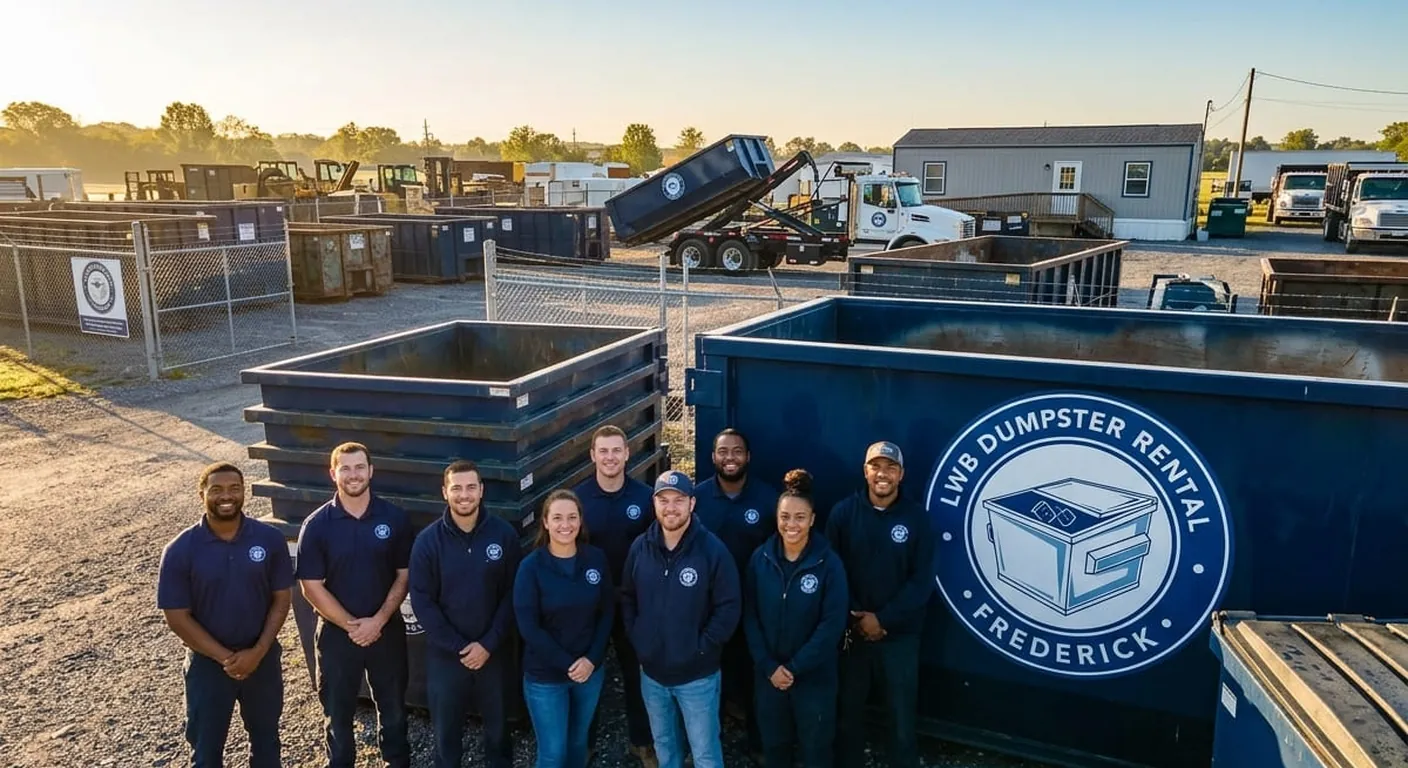
A whole-home cleanout is a different animal than a weekend of tidying up. Whether you're clearing out a house before it goes on the market, emptying a place after a move, or finally getting through a basement that's been collecting boxes since the Clinton administration, the job tends to expand to fill whatever time you give it. The way to keep it contained to a weekend is to plan the container first and the labor second — because in Frederick, the dumpster is usually the bottleneck, not the muscle.
Here's a workable Friday-to-Sunday framework we walk customers through constantly, adjusted for the two most common housing situations we see around here: a tight in-town rowhome and a roomier subdivision house out in Urbana, Ballenger Creek, or Spring Ridge.
Book the Dumpster Before You Start Packing
The single biggest mistake people make on a cleanout weekend is deciding on Thursday night that they'll "figure out the dumpster situation" once they see how much stuff there is. Don't. Call and book first, then build your weekend around the delivery window.
We offer same-day or next-day delivery in most cases, but calling before noon gives you the best odds of getting a container on the ground that same day — and if you want it sitting in the driveway first thing Friday morning, calling a day or two ahead removes all the guesswork. This matters more in Frederick than it might elsewhere: downtown rowhome blocks have narrow alleys and limited curb space, so our driver may need to talk through placement with you in advance, and if you're in an HOA community like Wormans Mill or Spring Ridge, some covenants limit how long a container can sit visible from the street. Sorting that out on the phone Tuesday is a lot less stressful than sorting it out Friday afternoon with a truck idling outside.
A 10-day rental is enough for most weekend cleanouts, but a whole-home job can run long if you hit a snag — a locked storage unit, a family member who wants to sort through boxes "just once more," a basement that turns out to have twice as much as you thought. It's worth asking about extending the rental for a small daily fee when you book, so you're not racing a hard deadline on Sunday night.
Friday Evening: Delivery, Staging, and the First Pass
Treat Friday as prep, not demolition. Have the dumpster delivered in the afternoon so it's sitting and ready when people get home from work. Before anything goes in it, walk the house with a notepad or your phone and flag three zones per room: keep, donate/sell, and trash. This sounds slow, but a 45-minute walkthrough Friday evening saves hours of second-guessing on Saturday, when everyone's tired and just wants things gone.
Use Friday night for the easy wins — things you already know are trash and don't need discussion. Expired pantry items, broken furniture, worn-out carpet remnants, anything water-damaged. Getting a truckload of obvious junk into the dumpster Friday night builds momentum and gives you a realistic read on how fast the container is filling, which tells you whether you're on pace for the size you booked.
Saturday: The Heavy Lifting Rooms
Saturday is for the rooms that take real time — kitchens, bedrooms, closets, garages, and basements. Work top-down if it's a multi-story house: attic or upper floor first, main floor second, basement and garage last. Two reasons. First, you don't want to carry debris back up through rooms you've already cleared. Second, basements and garages tend to hold the heaviest material — old furniture, tools, sometimes construction leftovers — and it helps to know how much container space you have left before you tackle them.
Split the household into a hauling crew and a sorting crew if you have the people for it. One group keeps physically moving items to the curb, the donation pile, or the dumpster; the other keeps making keep/toss decisions so the haulers never have to stop and wait on a judgment call. Momentum is everything on cleanout day — every pause to debate whether Grandma's lamp is worth keeping is a pause the whole crew feels.
Sunday: Final Sweep, Donation Runs, and Load-Out
Sunday morning is for the stuff that got skipped — the hall closet nobody wanted to deal with, the shed, the pile that accumulated by the back door all weekend. Do your donation drop-off runs first thing, before the donation centers get busy, and get anything you're selling separately (furniture, electronics, tools) photographed and out of the way so it doesn't end up in the dumpster by accident under weekend fatigue.
Late Sunday afternoon, do a final walkthrough of every room with fresh eyes. This is when people usually find the last bag behind a door or the box that got shoved under a bed. Confirm the dumpster is loaded evenly and nothing is stacked above the metal rail — more on that below — and call to schedule pickup if it's not already set for Monday.
| When | Focus | Goal by end of block |
|---|---|---|
| Friday afternoon | Dumpster delivery, walkthrough, easy trash | Container placed; obvious junk cleared from every room |
| Friday evening | Keep / donate / dumpster sort by room | Every room has a plan, not just a pile |
| Saturday morning | Upper floor and bedrooms | Bedrooms and closets emptied to keep/donate/toss piles |
| Saturday afternoon | Kitchen, main living areas | Furniture and appliances staged for dumpster or donation pickup |
| Saturday evening | Garage and basement | Heaviest material loaded while you still have container room to spare |
| Sunday morning | Donation drop-offs, remaining pockets | Donation vehicle unloaded; closets, shed, and stragglers cleared |
| Sunday afternoon | Final walkthrough, even loading | Every room checked twice; dumpster loaded flat and below the rail |
What Goes Curbside or to Donation vs What Goes in the Dumpster
Not everything belongs in the container, and sorting this correctly on Friday saves real money and hassle. Furniture in decent shape, working small appliances, clothing, books, and household goods are almost always better routed to donation — it's faster than trying to sell individual items on a deadline, and it keeps usable stuff out of the container so you have room for what genuinely has to be thrown away. Frederick County runs curbside recycling and seasonal yard-waste collection — check current details through Frederick County government — so cardboard, scrap metal, and yard debris can often be handled through those channels separately rather than eating up dumpster space.
What belongs in the dumpster: broken furniture, worn carpet and padding, damaged drywall or plaster, general household trash, and construction debris if the cleanout overlaps with a renovation. What should never go in, regardless of size ordered: paint and solvents, motor oil, tires, batteries, propane tanks, and anything hazardous or medical — those need a dedicated disposal path, and the Maryland Department of the Environment sets the rules on how that material has to be handled. If you're not sure whether something's allowed, ask before it goes in; pulling prohibited material back out after the fact is a lot more work than a quick phone call up front.
Older Frederick Rowhome vs Newer Subdivision House
The physical layout of the house changes how your weekend actually runs. A pre-1940 rowhome downtown near Carroll Creek or Baker Park usually has plaster-and- lath walls that are dramatically heavier than modern drywall, narrow interior stairs, and an alley that limits which size container can even get placed. A newer house out in Urbana, Ballenger Creek, or Wormans Mill typically has a wider driveway, an attached garage, and more square footage to clear — but often more accumulated volume, since there's simply more room to store things.
| Older in-town rowhome | Newer subdivision house | |
|---|---|---|
| Placement | Alley or tight street parking; may involve a City of Frederick permit for public right-of-way | Driveway placement, usually no permit needed on private property |
| Debris weight | Plaster-and-lath is heavy per square foot; watch total load weight | Drywall and modern materials are comparatively lighter |
| HOA/covenant limits | Rare in historic district, but check with the city on street placement | Common — some communities restrict how long a container is visible from the street |
| Access | Narrow stairs and doorways slow the hauling pace | Wider doorways and garage access speed hauling |
| Typical volume | Smaller footprint, but decades of storage in a small basement | More square footage and more accumulated volume overall |
If you're in one of the HOA-governed communities, it's worth a quick look at your covenant paperwork or a call to your management company before booking, so you know whether there's a visibility or duration limit to plan around. If you're downtown and placement will be on the street rather than a private driveway or yard, check with the city on permitting before the truck shows up — you can find current guidance through the City of Frederick.
The Basement Problem
Basements deserve their own mention because they wreck more cleanout weekends than any other room. In an older Frederick rowhome, the basement is often low- ceilinged, cramped, and accessed by a narrow stairway, which means everything has to be carried up and out by hand — budget more time than you think you need. In a newer subdivision house, the basement is frequently finished or semi-finished and simply holds more stuff: furniture, seasonal decorations, exercise equipment, years of boxes that migrated downstairs and never left. Either way, do the basement on Saturday, not Sunday, so you're not discovering how much is down there with only a few hours of daylight left.
Don't Overfill Above the Rail
Every roll-off container has a metal rail running around the top edge, and that rail is the loading limit — not a suggestion. Material has to sit level with or below the rail, not piled into a peak above it. This isn't us being fussy: a container loaded above the rail can't be hauled safely on the road, and our driver will have to ask you to pull material back down before pickup, which eats into your weekend and can affect your timeline if you're on a tight closing date or move-out deadline.
Two habits keep you under the line. First, break down big items — flatten boxes, disassemble furniture frames, cut large pieces down — instead of tossing them in whole and wasting air space. Second, load flat and even across the whole floor before you start stacking height in any one corner. A container packed tight and flat holds noticeably more than one with a lopsided pile in the middle. If you're partway through Saturday and can already see the load is running ahead of your container size, call us before Sunday — swapping to a larger size or scheduling a swap-out mid-project is a lot easier to arrange with a day's notice than as a Sunday-afternoon scramble.
Choosing the Right Size for a Whole-Home Job
Whole-home cleanouts run bigger than people expect, mostly because they combine several rooms' worth of debris that would normally be spread across separate, smaller projects. A single-room decluttering might fit in a 10 or 15 yard container, but a full house — especially one with a basement or garage full of accumulated items — more often calls for something in our 20 to 30 yard range. Our residential dumpster rental service is built around exactly this kind of job, and we're glad to walk through room count, whether there's a basement or garage involved, and rowhome versus subdivision access constraints before you book, so the size matches the actual weekend rather than a guess.
If you're clearing out a property because of an inheritance or a family member's move to assisted living rather than your own household, the pacing is a little different — there's often more sentimental sorting involved and less rush. Our estate cleanout checklist covers that version of the process in more detail if that's closer to your situation.
A whole-home cleanout weekend goes smoothly when the container shows up on time, the plan is set before Saturday morning, and everyone knows what's going in the dumpster versus what's going to donation. Call LWB Dumpster Rental Frederick at (240) 549-6718 to book delivery for your cleanout weekend and get sized up for the job before you start hauling.
Need a container in Frederick or anywhere in Frederick County? Call (240) 549-6718 and describe the job. We will name the size, the flat rate and a delivery slot — often the same day. No forms, no waiting on an email.