
Contractors
Construction Debris Disposal in Frederick, MD
A contractor-focused guide to sizing, scheduling and placing construction dumpsters around Frederick's older homes, HOA subdivisions and Fort Detrick-area jobsites.
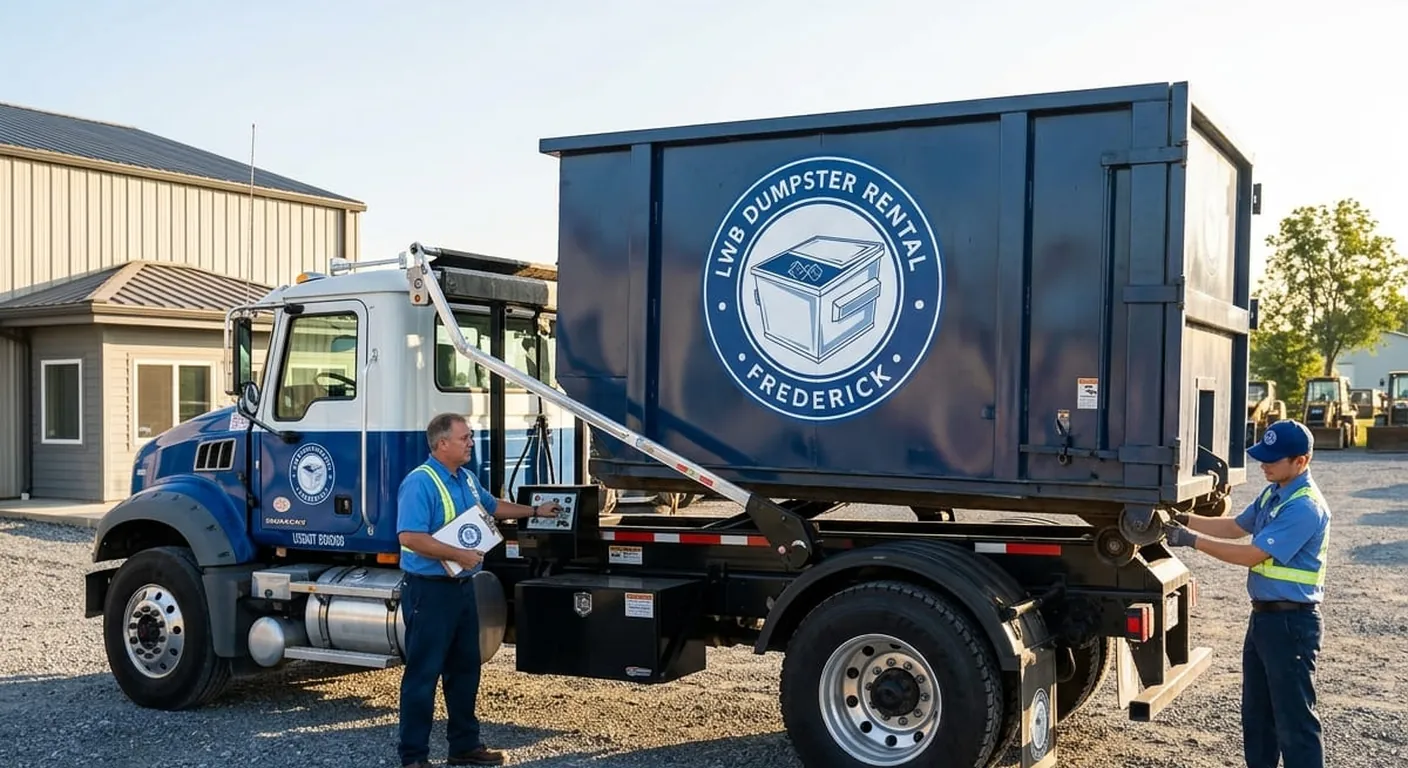
Contractors working in and around Frederick, MD deal with a wider mix of job sites than almost any market in central Maryland — pre-1940 rowhomes downtown with plaster-and-lath walls, ongoing commercial buildouts tied to Frederick County's Fort Detrick-area growth, and fresh-built subdivisions in Urbana, Ballenger Creek, Spring Ridge and Wormans Mill where an HOA is watching the curb. A dumpster that works fine for a homeowner's garage cleanout is often the wrong call on a jobsite. This guide covers how to plan container size, service type and delivery logistics for construction and demolition work specifically, not general household debris.
Mixed C&D Debris vs. Dedicated Concrete and Heavy Loads
The single biggest mistake we see on job sites is treating every dumpster the same. A general construction dumpster is built for mixed construction and demolition debris — framing lumber, drywall, trim, flooring, packaging, cabinetry, insulation, roofing scraps mixed with other material, and general jobsite trash. That mixed load has volume but relatively moderate weight per cubic yard, so a 20 or 30 yard container usually makes sense.
Concrete, brick, block, asphalt, dirt, sod and other pure heavy material behave completely differently. These materials are dense enough that a 20 or 30 yard box would exceed a safe, legal haul weight long before it looks full. That's why heavy material is restricted to the 10 and 15 yard containers regardless of how much room is left in the box — it's a weight problem, not a space problem. If a job is producing a genuinely clean, separated load of concrete, brick or masonry, book it as a dedicated concrete and heavy debris load rather than trying to run it through a standard construction container. Keeping the two streams separate on-site also sets you up for the recycling angle covered further down.
If your scope spans a full teardown — interior guts, framing, old mechanical systems, plaster, lath, and structural debris together — that's a job for a demolition debris container, sized around what a walk-through of the structure actually suggests rather than a rule of thumb from a different job type.
Job-Site Placement and Access Logistics
Frederick's geography forces a different placement conversation depending on where the job is. In-town, on the narrow alleys and tight lots around Carroll Creek and the historic downtown grid, a driveway or off-street pad is rarely available, which usually means the container has to sit on the street or right-of-way. That triggers different rules than a driveway drop, and it's worth checking with the City of Frederick on permitting before the truck shows up, especially if the container will block a travel lane, sidewalk or on-street parking for more than a day.
Out in the newer subdivisions — Urbana, Ballenger Creek, Spring Ridge, Wormans Mill — the constraint isn't the street, it's the covenant. Placement on a private driveway generally doesn't require a municipal permit, but many of these communities have HOA rules limiting how long a container can sit visible from the street, and some require advance notice to the HOA before delivery. Build that into your schedule before you order, not after a neighbor complains — a container that shows up without notice can turn into a stop-work headache mid-project.
On any site, give the driver a real path: overhead clearance for trees and wires, a flat spot that can bear the container's weight once loaded, and enough turning radius for a roll-off truck to back in and pull out without repeated maneuvering. Central Maryland's hot, humid summers soften asphalt enough that a loaded container can leave impressions if it sits in one spot too long in July or August — a morning delivery, before the pavement heats up, is the safer call. Freeze-thaw winters bring the opposite problem: frost heave and ice can make a placement spot unstable, so flag that when you book.
Weight Planning: Older Frederick Homes vs. New Construction
Weight allowance is where a lot of contractors get surprised on interior demo jobs, and Frederick's building stock makes this more important than in a lot of markets. A pre-1940 rowhome downtown, or an older farmhouse out past Braddock Heights or Myersville, is very likely to have plaster-and-lath walls instead of drywall. Plaster-and-lath is dramatically heavier per cubic foot than modern drywall and joint compound — the same wall area that would fill a container lightly in new construction can push an older-home demo close to its weight allowance well before the box looks full.
New-construction and remodel jobs using standard drywall, engineered lumber and modern finish materials behave more predictably — you can generally plan by volume and expect the weight to track along with it. On older housing stock, plan by weight first and volume second. If you're gutting a plaster-and-lath interior, size up, or split the job into a demo-focused load and a separate finish-material load, rather than assuming one container size covers both a 1920s rowhome and a 2015 subdivision build the same way. Our flat-rate pricing includes the weight allowance up front, so there's no guessing at a per-ton add-on mid-job — but going over the included allowance is still avoidable with the right size call at booking.
Scheduled Swap-Outs for Multi-Day and Multi-Phase Jobs
Single-container jobs are the exception on most real construction timelines, not the rule. Demo, framing, rough-in, and finish phases each generate their own debris, often days or weeks apart, and a container sitting full and unused between phases just eats up site space and rental time. The standard rental period gives you a full week on-site, extendable at a small daily or weekly rate if a phase runs long — but for anything beyond a short remodel, it's usually smarter to schedule a swap-out.
A swap-out means we pull the full container and drop an empty one on the same trip, timed to your phase schedule rather than a fixed calendar date. That keeps the site clear for the next crew and avoids paying to store a full box while framing or rough-in wraps up. For multi-phase commercial or larger residential jobs, a roll-off service with a pre-planned swap-out cadence — demo day, framing wrap, drywall/finish — keeps debris flow matched to the actual build schedule instead of guessing at one container size to cover the whole job. Call ahead of each phase rather than the day debris starts piling up; scheduling gets tighter the closer you get to the date you actually need the swap.
Working Around Fort Detrick-Area Commercial Work and HOA Subdivisions
Fort Detrick drives a steady stream of commercial buildout, tenant fit-out and renovation work in its surrounding commercial corridors, much of it tied to contractors and support businesses tied to the installation's growth and the PCS-driven turnover it generates. Commercial sites near the installation and along the busier commercial corridors often come with tighter loading-dock windows, shared-access parking lots and stricter site rules than a standalone residential job — confirm delivery windows and container placement with property management or the general contractor's site plan before scheduling, since a container blocking a shared access lane can affect other tenants, not just your crew.
On the residential side, the newer HOA subdivisions call for the opposite kind of planning — less about site access, more about visibility and timing. Covenants in communities like Urbana and Spring Ridge commonly restrict how long a dumpster can remain visible from the street, and some associations want notice before delivery even on a private driveway. If you're a remodeling contractor working a string of jobs through the same subdivision, it's worth building HOA notice lead time into your proposal and schedule from the start rather than treating it as a delivery-day surprise — a swap-out cadence timed tightly to your actual work phases also keeps you well inside most covenant windows.
Separating Clean Concrete and Brick for Recycling
The US EPA's guidance on construction and demolition materials is clear that C&D debris recycles best when the material stream is kept clean — concrete, brick and masonry separated from wood, drywall, insulation and mixed trash rather than combined into one load. A load of pure concrete or brick can generally be processed and recycled into aggregate; the same material mixed in with framing lumber, wiring and general demo debris usually can't be, and ends up landfilled along with everything else in the load.
Practically, that means keeping a dedicated concrete/heavy debris container on-site alongside your general construction box whenever a job produces both — foundation removal plus interior demo, for example, or a driveway tear-out running alongside a renovation. It costs nothing extra in crew effort to toss concrete in one box and everything else in the other, and it's the difference between that concrete getting recycled into aggregate and it taking up landfill space for no reason. The Maryland Department of the Environment oversees solid waste and recycling policy statewide if you want the regulatory background — see mde.maryland.gov — but the on-site habit of separating clean masonry from mixed debris is what actually makes the recycling happen.
Matching Job Type to Container Size and Service
Use this as a starting point, not a substitute for a walk-through — every job's actual debris mix varies, and our team will size a job over the phone once we know the scope. Full size specs and comparisons are on the sizes page.
| Job Type | Recommended Size | Service to Book |
|---|---|---|
| Interior demo, older rowhome (plaster-and-lath) | 15 yard | Demolition debris |
| Bathroom or kitchen remodel, single unit | 10–15 yard | Construction dumpster |
| New-construction framing, drywall and general waste | 20–30 yard | Construction dumpster |
| Whole-house teardown or major renovation gut | 30–40 yard | Demolition debris |
| Concrete, brick, block or masonry only | 10–15 yard (dedicated) | Concrete/heavy debris |
| Multi-phase commercial buildout or long remodel | 30 yard, scheduled swap-outs | Roll-off service |
Contractors quoting a job across several of these categories at once — say, a rowhome gut that includes both plaster demo and a concrete stoop removal — should plan on two container types rather than forcing one box to cover both. It's a small scheduling step that avoids weight-allowance headaches and keeps the concrete stream clean for recycling.
Booking a Jobsite Container the Right Way
The details that matter most when you call: the actual debris mix (mixed C&D vs. dedicated concrete/heavy), whether the site is downtown/tight-access or a driveway drop, whether an HOA notice period applies, and roughly how many phases the job will run through. Same-day or next-day delivery is generally available if you call before noon, which matters when a demo crew is already scheduled and the container isn't on-site yet.
Before any digging or excavation work — footings, utility trenching, a slab tear-out that goes below grade — call Miss Utility at 811 ahead of the work, not the day of. It's a Maryland requirement and it protects your crew and your schedule from a hit line turning a one-day job into a multi-week delay.
For a jobsite quote sized to your actual scope — mixed C&D, dedicated concrete, a scheduled swap-out plan, or an HOA-notice delivery in one of the east-side subdivisions — call LWB Dumpster Rental Frederick at (240) 549-6718. We'll walk through the job with you and get the right container and service on your schedule, not just on the calendar.
Need a container in Frederick or anywhere in Frederick County? Call (240) 549-6718 and describe the job. We will name the size, the flat rate and a delivery slot — often the same day. No forms, no waiting on an email.