
Roofing
Roofing Tear-Off Dumpster Sizing
Roofing debris is heavy, not bulky. Here's how Frederick homeowners and roofers size a dumpster correctly by roofing squares, layers, and weight.
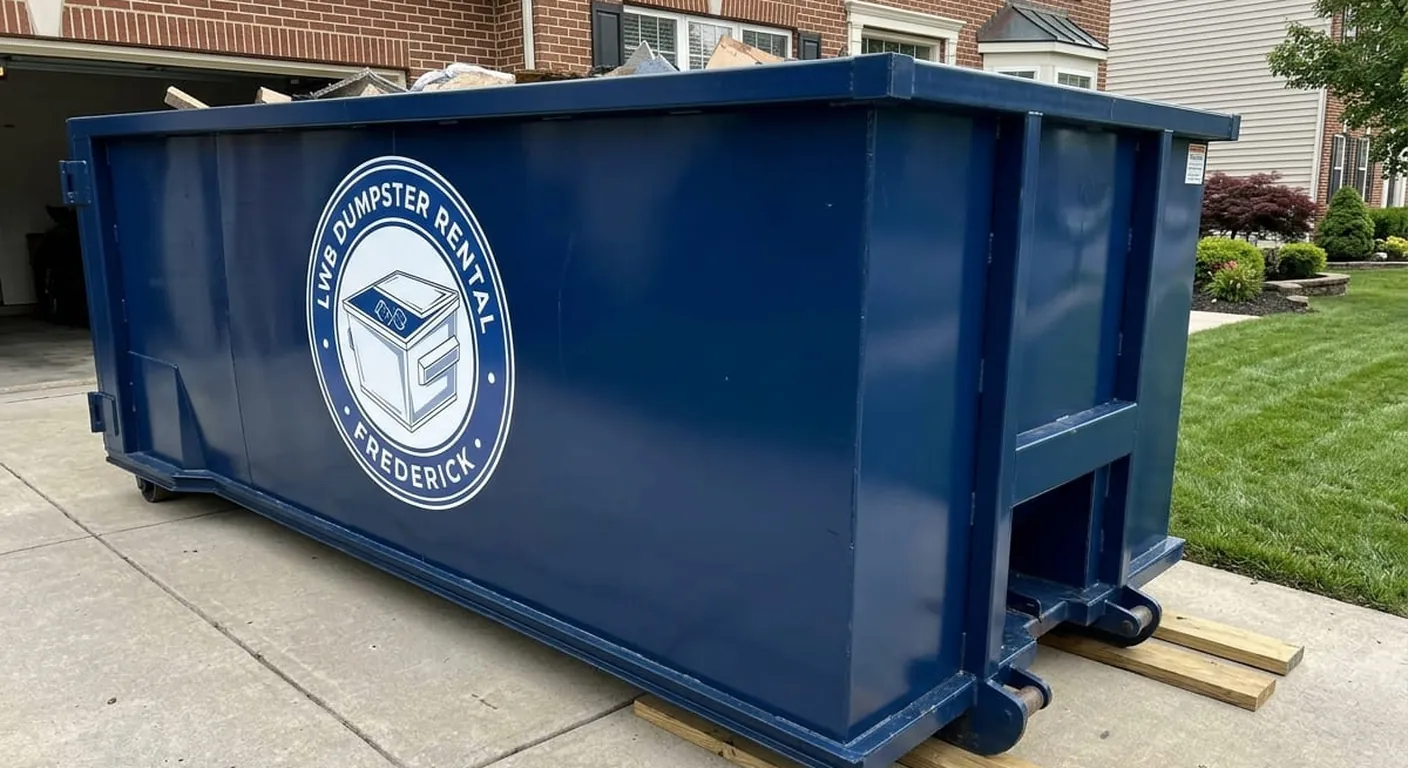
Ask five roofers how big a dumpster you need for a tear-off and you'll get five different answers, because most of them are eyeballing volume when the real constraint is weight. A stack of old asphalt shingles takes up surprisingly little space in a container, but it's dense enough to hit a weight allowance long before the box looks full. Get the sizing wrong in Frederick's summer heat, on a tight in-town driveway, or right after a Piedmont hailstorm, and you're either paying for overage or waiting on a second container mid-job. Here's how to think about it properly.
Why Roofing Debris Is Weight-Limited, Not Volume-Limited
Every roll-off container has two limits: how much volume it holds and how much weight it's rated to carry. For household junk or construction scraps, volume usually runs out first. Roofing is the opposite. Torn-off asphalt shingles, old felt underlayment, and the nails and flashing that come with them are compact and heavy — a full layer of standard three-tab or architectural shingles can run in the neighborhood of 200 to 400 pounds per roofing square, depending on the shingle type and how many layers are being stripped. Stack two or three layers of old roofing off the same house, and the weight adds up fast even though the pile in the driveway doesn't look that dramatic.
This matters because a 20-yard container that would swallow a whole houseful of furniture with room to spare can max out on weight with roofing debris well before it's visually full. Overloading a container also isn't just a billing problem — an overweight roll-off is harder and less safe to haul, and most operators simply won't move one past its rated limit. The practical takeaway: for roofing jobs, size the container around the weight estimate first, and treat the volume as a secondary check.
It also explains why two houses with the same-looking roof can need different containers. A 1,800 square foot ranch re-roofed once with standard three-tab shingles is a light, predictable load. The same footprint stripped down through two or three older layers — common on Frederick County homes that have been re-roofed over the original rather than torn off each time — can weigh two or three times as much even though the pile looks similar from the driveway. When you're getting a container quoted, tell your rental provider what's actually coming off the roof, not just the square footage, so the weight allowance matches reality instead of a rough guess.
Estimating By Roofing Squares And Layers
Roofers measure roof area in "squares" — one square equals 100 square feet of roof surface. It's the same unit your roofer or estimator is already using, so it's the easiest starting point for sizing a dumpster. The two numbers you actually need are the total squares on the roof and how many layers of shingles are coming off. A single-layer tear-off on a modest ranch is a very different load than stripping three layers off an older Frederick County farmhouse or a downtown rowhome that's been re-roofed over itself more than once.
As a rough planning guide, figure that each roofing square of a single layer of asphalt shingles adds a few hundred pounds, and that number roughly multiplies with each additional layer you're removing. Steep or complex rooflines, heavier architectural shingles, and wet or waterlogged felt (common after a summer storm) all push the estimate up further. When in doubt, round up on container size rather than weight allowance — it's cheaper to have a little extra room than to get charged for tonnage over the line, or worse, have the driver decline to haul an overloaded box.
| Roof Size (Squares) | Layers Being Removed | Typical Container | Notes |
|---|---|---|---|
| Up to 15 squares | 1 layer | 10 yard | Small ranch, garage, or addition re-roof |
| Up to 15 squares | 2 layers | 15 yard | Weight climbs fast with a second layer |
| 15–25 squares | 1 layer | 15 yard | Typical single-story Frederick County home |
| 15–25 squares | 2 layers | 20 yard | Common on older re-roofed houses |
| 25–35 squares | 1–2 layers | 20 yard | Larger footprint or two-story home |
| 25–35 squares | 3 layers | 30 yard | Watch the weight allowance closely |
| 35+ squares, any large or steep roof | 2–3 layers | 30 yard, or two containers | Splitting the job into two hauls is often more cost-effective than one overloaded box |
Note the pattern: for most Frederick-area homes doing a straightforward single-layer tear-off, a 10 yard or 20 yard container covers it. Where jobs go bigger is stacked layers, steep pitches with extra waste, or larger two-story roofs. If you're not sure which bracket your job falls into, our team can walk through the specifics with you — see the full roofing dumpster rental page for how we handle these jobs, or browse the complete container lineup on our sizes page.
Driveway Placement Near The Roofline And Chute Setup
Positioning matters as much as sizing on a tear-off. The whole point of a well-placed container is that debris goes almost straight from the roof edge into the box, not across a lawn or through a side gate. That usually means getting the dumpster as close to the eave line as the driveway allows, sometimes with a tarp or plywood chute rigged from the roofline down to the container to keep shingles and nails from scattering into the yard or landscaping.
Frederick's mix of housing stock makes this more of a puzzle than it sounds. Newer subdivisions like Urbana, Ballenger Creek, and Spring Ridge generally have wide driveways and more room to work with, though HOA covenants in these communities often limit how long a container can sit visible from the street, so tear-off timing matters as much as placement. Older in-town neighborhoods near Carroll Creek and downtown present the opposite problem — narrow alleys, tight lot lines, and rowhomes packed close together can rule out the larger containers entirely and require careful placement planning before delivery. Either way, walk the route from roof edge to driveway before the crew starts pulling shingles, and confirm placement with your rental provider ahead of time so the truck isn't guessing on delivery day. For placement that protects pavement and landscaping during the whole rental, see our guide on protecting your driveway during dumpster delivery.
One more placement note: dropping a container on private property like a driveway or yard generally doesn't require a permit, but if the job forces placement in the street or public right-of-way — common on some of the narrower downtown blocks — check with the City of Frederick first about what's allowed.
Surface protection matters here too, and not just for the driveway concrete or asphalt itself. A fully loaded roofing container is one of the heavier loads a driveway sees all year, and the point loading under the delivery truck's wheels is a separate concern from the container's own footprint. Plywood or planking under the drop points is a simple, cheap step that saves a lot of grief later, especially on older poured driveways or pavers common around Frederick's in-town lots.
Hot, Humid Maryland Summers And Asphalt Softening
Central Maryland summers bring the kind of heat and humidity that softens asphalt shingles sitting on a hot roof, which changes how a tear-off day should be scheduled. Shingles that have been baking since mid-morning get gummy and harder to strip cleanly, tar-paper adhesives get sticky, and the whole crew works slower and less efficiently once the roof deck heats up in the afternoon sun. It also makes for a genuinely unpleasant and less safe work environment for anyone up on a steep pitch in July or August.
The practical fix most experienced roofers already use: schedule the tear-off and dumpster delivery for early morning, before the roof surface has had hours to absorb heat. A container that arrives at first light means the crew can be stripping shingles while the roof is still cool and workable, loading the debris steadily through the morning instead of racing a softening roof in the afternoon. It also keeps the container itself out of direct sun for less of the day, which matters less for the box but is one more reason morning delivery windows work better for roofing jobs specifically. If your project is weather-dependent, our same-day delivery option can help you move fast when a clear morning opens up in the forecast.
Hail And Wind-Damage Tear-Offs After Piedmont Storms
Frederick County sits at the foot of the Catoctin Mountain and South Mountain ridgeline, and the terrain has a way of intensifying summer thunderstorms as they roll off the Piedmont — hail, straight-line wind gusts, and occasional tornado warnings aren't rare in a typical storm season. When a storm does real damage to a roof, insurance-driven tear-offs tend to move fast: adjusters want the old roof documented and off quickly, and roofing crews are often booking multiple jobs back-to-back in the same neighborhood after a bad storm event.
That timing crunch is exactly when dumpster sizing mistakes get expensive. A rushed job is more likely to underestimate weight, especially if the storm also soaked the old felt and shingles before they came off — wet roofing debris weighs noticeably more than dry. If your tear-off is storm-related, lean toward the next size up in the table above rather than the minimum, and mention the storm damage when you book so delivery can be scheduled around your roofer's timeline. Same-day or next-day delivery (call before noon for the best odds of getting on the schedule) helps keep a storm-damage job moving without debris piling up in the yard while you wait on a container.
A Few More Things Worth Knowing
- Nails, flashing, and small amounts of wood decking from a tear-off are fine mixed in with shingles — but check before tossing anything questionable, since prohibited items like paint, solvents, or propane tanks still apply to roofing containers the same as any other rental.
- Shingle debris in Maryland is generally handled through regional recycling and disposal infrastructure regulated by the Maryland Department of the Environment, and there's growing interest nationally in recycling old asphalt shingles rather than landfilling them — the EPA's guidance on construction and demolition materials is a good general reference if you want to understand how that process works.
- Multi-layer tear-offs and steep, complex rooflines are always going to be harder to estimate from a phone call alone — give your rental provider the honest square count and layer count up front rather than guessing low.
If you're not sure whether your roof calls for a 10, 15, 20, or 30 yard container, call Michael Davis and the crew at LWB Dumpster Rental Frederick at (240) 549-6718 before your tear-off starts. We'll talk through your roof size, layer count, and driveway setup and get the right container delivered — often same-day or next-day — so your roofer isn't stuck waiting on debris removal mid-job.
Need a container in Frederick or anywhere in Frederick County? Call (240) 549-6718 and describe the job. We will name the size, the flat rate and a delivery slot — often the same day. No forms, no waiting on an email.