
Sizing
What Size Dumpster Do I Need? Frederick MD Sizing Guide
Picking a dumpster size isn't just about volume. Here's how Frederick's mix of older rowhomes and newer HOA subdivisions changes the sizing math, project by project.
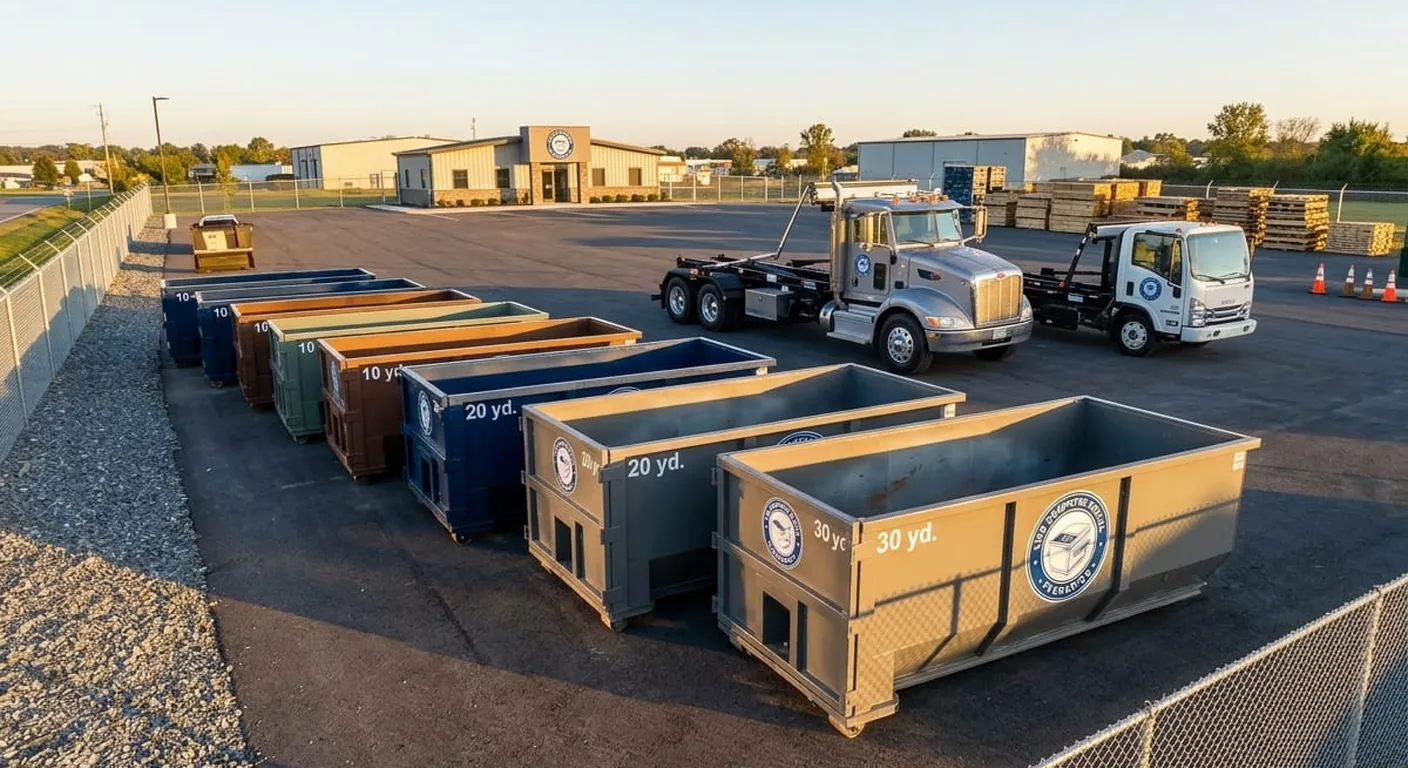
Every call we get starts roughly the same way: "I think I need a 20 yard, but I'm not totally sure." That instinct is usually a decent starting point, but it's guesswork, and guesswork on a rented container costs you money either way. Order too small and you're paying for a second pickup or a walk-off run to a transfer station. Order too big and you're paying to haul mostly empty air down I-70. The better approach is to think about what's actually going in the box — and, if you're in one of Frederick's older in-town blocks, what that material weighs — before you settle on a yardage.
Start with the job, not the yard number
Homeowners tend to shop by container size first: "how big is a 20 yard dumpster, anyway?" Contractors tend to shop by weight allowance, because they've been burned by overage fees before. Both are right to care, but the size that actually fits your driveway or your budget depends on what you're clearing out. A full basement cleanout in a Wormans Mill townhome and a full basement cleanout in a pre-1940 rowhome downtown can look identical in cubic feet and still land in two different weight brackets, because what's inside the walls is different.
If you only remember one thing from this guide, make it this: describe the project to us on the phone at (240) 549-6718 and we'll size it with you. That's not a sales line — it's genuinely faster and more accurate than working it out from a size chart alone, because we deliver into these neighborhoods every week and know where the surprises tend to hide.
Volume vs. weight: the distinction that trips people up
A roll-off dumpster has two limits, and they don't move together. The volume limit is how much physical space is inside the box — how high you can fill it before it won't legally travel on the road. The weight limit is the tonnage included in your flat rate before extra charges kick in. Light, bulky material (furniture, cardboard, yard waste, drywall scraps) fills up a container's volume long before it comes close to its weight allowance. Dense material (concrete, brick, plaster, tile, dirt, roofing shingles) can hit the weight limit while the dumpster still looks half empty.
This is where Frederick's housing stock actually matters to the decision. A lot of the brick Federal-period rowhomes near Carroll Creek and Baker Park were built with plaster-and-lath interior walls instead of drywall — wood lath strips with several layers of hand-applied plaster, which is dramatically heavier per square foot than the gypsum board used in the newer subdivisions out toward Urbana, Ballenger Creek, and Spring Ridge. Gut a few rooms of lath-and-plaster and you can fill a container's weight allowance well before you fill its box. Gut the same square footage of 1990s drywall and you'll usually run out of volume first.
The practical takeaway: for older downtown Frederick renovations, size down on volume and budget up on weight. A 15 yard that fills to the top with lath, plaster, and horsehair debris may already be pushing its weight allowance, while a 20 yard doing the same demo in a newer HOA-zone house might still have room to spare. When you call, tell us the age of the house and roughly what's coming out of the walls — that one detail changes our recommendation more than almost anything else.
Dumpster sizes at a glance
Here's how our five container sizes break down in real terms. Weight ranges are general guidance for typical mixed debris, not a hard cap — your flat-rate quote includes a set weight allowance, and we'll walk you through it on the phone.
| Size | Approx. dimensions | Typical weight range | Best for |
|---|---|---|---|
| 10 yard | 12 ft × 8 ft × 3.5 ft | 1–2 tons | Small cleanouts, single-room remodels, yard debris, concrete/dirt in small volume |
| 15 yard | 16 ft × 8 ft × 4 ft | 2–3 tons | Garage or basement cleanout, mid-size roofing tear-off, small renovation |
| 20 yard | 22 ft × 8 ft × 4.5 ft | 3–4 tons | Whole-home cleanout, kitchen/bath remodel, multi-room flooring tear-out |
| 30 yard | 22 ft × 8 ft × 6 ft | 4–5 tons | New construction, additions, large demolition, whole-house siding/roof jobs |
| 40 yard | 22 ft × 8 ft × 8 ft | 5–6 tons | Commercial buildouts, full teardown/demolition, large-scale construction |
Note that the 10 and 15 yard sizes are also the ones we generally load with heavy material like concrete or dirt — the taller 20, 30, and 40 yard boxes simply can't be safely filled with dense debris up to their volume line without blowing well past a legal road weight, so straight concrete, brick, or dirt jobs almost always get routed into one of the smaller containers even if the pile looks sizable on the driveway.
Matching size to the project
Below is a rough guide by project type. These are starting points, not guarantees — a "small" kitchen remodel with a lot of cabinetry and tile can out-punch a "medium" one that's mostly just flooring.
| Project | Typical size | Notes |
|---|---|---|
| Garage or attic cleanout | 10–15 yard | Bulky but light — volume usually maxes out before weight |
| Single bathroom remodel | 10 yard | Tile and old fixtures add weight fast in a small footprint |
| Kitchen remodel | 15–20 yard | Cabinets, countertop, and flooring together add up quickly |
| Roofing tear-off | 15–20 yard | Shingles are dense — weight matters more than box size, see our roofing sizing guide |
| Estate or whole-home cleanout | 20–30 yard | Volume of furniture and household goods drives the size, not weight |
| Concrete, brick, or dirt removal | 10–15 yard | Almost always weight-limited well before the box is visually full |
| Full structure demolition | 30–40 yard | Often needs multiple containers or swap-outs on larger jobs |
| New construction / addition | 20–30 yard | Mixed lumber, drywall, and packaging — usually volume-driven |
Access and delivery clearance matter as much as size
The right dumpster on paper still has to physically get to your property, sit somewhere legal, and get picked up again without our driver having to thread a needle. This is a bigger deal in Frederick than in a lot of markets because the city has two very different placement environments.
Historic downtown and older in-town blocks
Narrow alleys, tight rowhome lots, on-street parking, and low tree canopy around Carroll Creek and Baker Park can rule out a 30 or 40 yard truck delivery before you even get to the weight conversation. A 20 yard is often the practical ceiling for a lot of these addresses, and sometimes even a 15 yard is the better call so the truck can pull in and drop the box without blocking the alley or scraping a fence. If you're placing a container on the public street or right-of-way rather than a driveway or yard, check with the City of Frederick about whether a permit applies — private-property placement generally doesn't need one, but the street does.
Newer subdivisions — Urbana, Ballenger Creek, Spring Ridge, Wormans Mill
Driveways are wider and access is rarely the constraint out here, but many of these communities have HOA covenants that limit how long a container can sit visible from the street. That doesn't change which size you need, but it does change your timeline — it's worth checking your community's rules before you book so the rental window lines up with what your HOA allows, especially if the project might run past our standard 7-day rental.
Wherever you're located, give us a rough idea of the driveway width, any low-hanging branches or wires, and whether the truck will need to back in or can pull through. Our same-day and next-day delivery works best when we already know exactly where the box needs to land — call before noon for the best odds of getting on the schedule that day.
Filling in the middle: how the sizes actually compare in use
Numbers on a spec sheet don't always translate to a feel for the container until you've stood next to a few of them. A 10 yard is roughly the footprint of a large pickup-truck bed load, but stacked higher — it's what we bring for a single overloaded room or a driveway full of yard debris after a storm. Step up to a 15 yard and you've got enough depth to swallow a full garage clear-out or an average roof tear-off without crowding the fill line. The 20 yard is our most-booked size because it splits the difference well: tall enough for a kitchen gut job's cabinets and countertops, still narrow enough to sit on most driveways without eating the whole yard.
Once you're into 30 and 40 yard territory, you're generally past "cleanout" and into "construction" — new builds, additions, or a demolition where framing lumber, sheathing, and packaging materials pile up by the truckload. Those larger boxes are eight feet tall at the wall, which matters for two reasons: they need a longer, straighter approach for the delivery truck, and anyone tossing debris over the side by hand will want a ladder or a ramp for anything past waist height. If your crew is loading by hand rather than with an excavator or skid steer, that's worth factoring into which size actually gets used efficiently, not just which one has the most cubic yards on paper.
A few Frederick-specific things that affect sizing
- Summer heat: Hot, humid Frederick summers soften asphalt driveways under the weight of a loaded container, so we favor morning deliveries in peak heat and recommend placing plywood under the drop point on softer driveways.
- Winter freeze-thaw: Frozen or waterlogged ground can affect where a container can safely sit, particularly on yards rather than paved surfaces.
- Storm cleanup: After a nor'easter or the remnants of a tropical system move through, yard debris volume spikes fast — downed limbs and storm debris are bulky and light, so they behave like a volume problem, not a weight problem, even though the pile looks intimidating.
- Digging or excavation: If your project involves digging — a shed pad, a fence line, a drainage fix — get your lines marked first. Maryland law requires a call to Miss Utility (811) before you break ground, separate from anything about the dumpster itself.
When in doubt, just call and describe the job
We'd rather spend two minutes on the phone getting the size right than have you order online, guess wrong, and end up needing a swap. Tell Emily or Samantha what the project is, roughly how old the house is, what's coming out of it, and where the truck needs to park. That's usually enough for us to recommend a size with confidence — and if it's a borderline call between two sizes, we'll generally point you to the smaller one first, since it's easy to add a swap-out if you fill it faster than expected. You can see the full lineup on our dumpster sizes page or browse everything we haul on the services page before you call.
For cleanouts specifically, our estate cleanout checklist walks through how volume adds up room by room, and if you're weighing cost alongside size, the cost guide breaks down what typically drives the price on flat-rate rentals.
Ready to get a size locked in? Call LWB Dumpster Rental Frederick at (240) 549-6718 and describe your project — we'll recommend the right container, confirm delivery access, and get you on the schedule, often same-day or next-day.
Need a container in Frederick or anywhere in Frederick County? Call (240) 549-6718 and describe the job. We will name the size, the flat rate and a delivery slot — often the same day. No forms, no waiting on an email.